














How to Clean and Maintain Frameless Shower Doors So They Keep Looking New
Learn how to clean and maintain frameless shower doors to prevent water spots, soap scum, and mildew. Keep your shower glass looking new.
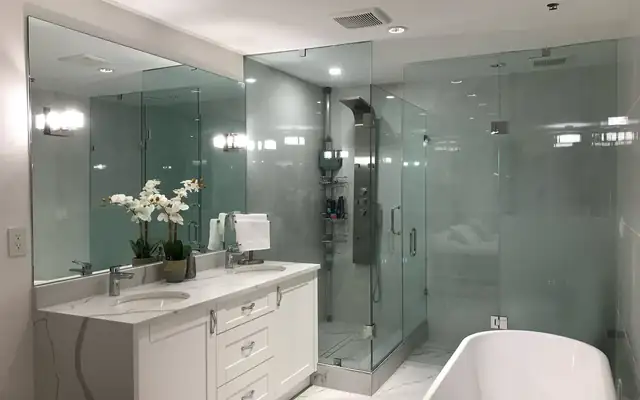
Frameless shower doors have a clean, modern look that works in almost any bathroom. With minimal metal framing and large panels of clear glass, they make a room feel more open. They also reveal everything, including hard-water spots, soap film, fingerprints, and mildew in the corners.
That visibility is the tradeoff. A shower enclosure can be structurally sound and still look tired if the glass has not been cleaned consistently. The good news is that most buildup is preventable. A simple routine takes far less effort than trying to restore cloudy glass after months or years of neglect.
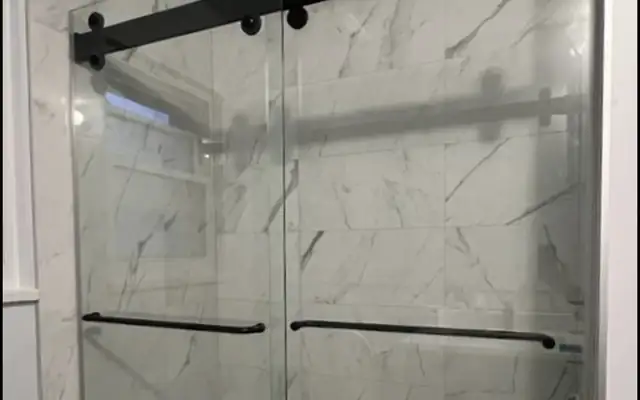
Whether you have pivot shower doors, swing shower doors, sliding glass shower doors, or a fixed frameless panel, proper maintenance protects the appearance of the glass and helps the hardware work as it should.
Why shower glass gets cloudy
Water itself is the main culprit, especially in areas with mineral-heavy water. Each shower leaves droplets on the glass. As those droplets dry, they leave behind calcium, magnesium, and other minerals. Over time, the deposits build up into visible white spots or a hazy film.
Soap, shampoo, body wash, and conditioner add another layer. Many personal-care products contain oils and waxes that cling to the glass, mixing with mineral deposits and making the buildup harder to remove. In a busy household, this can happen surprisingly fast.
Humidity also matters. A bathroom that stays damp for long periods creates favorable conditions for mildew around silicone seals, door sweeps, and hardware. Frameless shower doors have fewer places for moisture to hide than framed shower doors, but they still need airflow and occasional detail cleaning.
The frustrating part is that cloudy shower glass does not always respond to standard glass cleaner. Once minerals etch the surface, the issue is no longer just residue sitting on top of the glass. That is why a small amount of regular upkeep is worth it.
The easiest daily habit: squeegee after every shower
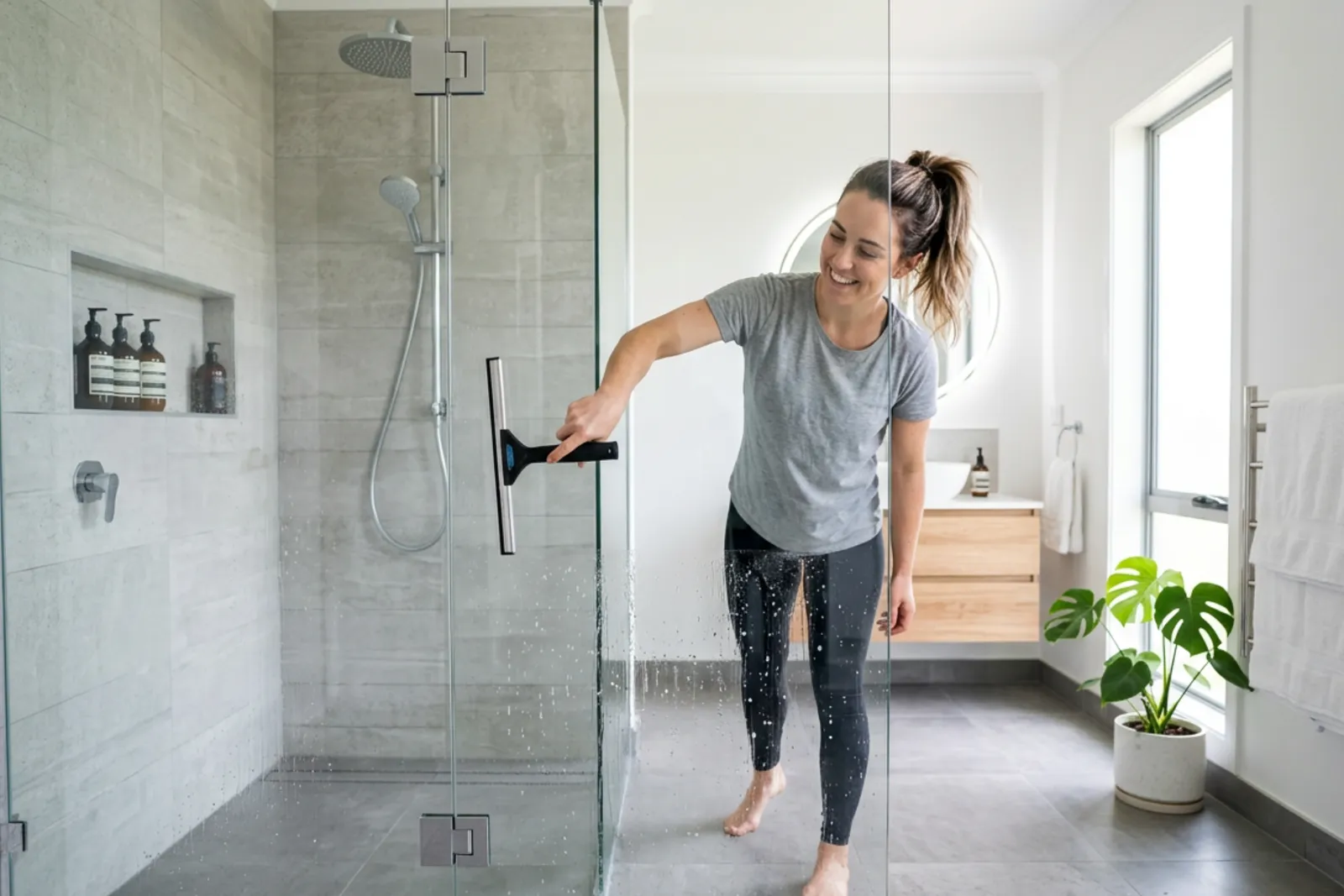
If there is one maintenance task that makes the biggest difference, it is using a squeegee after every shower.
It takes less than a minute. Start at the top of the glass and pull the blade downward in overlapping strokes. Wipe the squeegee blade on a towel as needed, then use a microfiber cloth to dry the bottom edge of the door and the threshold.
This routine removes water before it can evaporate and leave minerals behind. It also cuts down on soap film, reduces moisture around the hardware, and makes weekly cleaning much easier.
Keep the squeegee inside the shower where people will actually use it. A small hook, suction holder, or wall-mounted holder works well. If the tool is buried in a cabinet, it tends to stay there.
For homes with children or frequent guests, perfection is unrealistic. Even a quick wipe-down a few times a week is better than nothing. Consistency matters more than a flawless routine.
A weekly cleaning method that is safe for shower glass
A weekly cleaning keeps most frameless shower doors looking clear without requiring harsh products. You do not need an aggressive abrasive cleaner for ordinary buildup. In fact, abrasive powders and rough scrubbers can scratch glass or damage protective coatings.
Here is a practical method:
Rinse the glass with warm water to loosen surface residue.
Spray a pH-neutral glass cleaner or a mild mixture of warm water and a few drops of dish soap.
Let the cleaner sit for several minutes, especially on areas with visible soap film.
Wipe the glass using a soft microfiber cloth or a nonabrasive sponge.
Rinse thoroughly so no cleaner remains on the glass or hardware.
Squeegee the glass dry and wipe around hinges, handles, and seals with a clean cloth.
Microfiber is a better choice than paper towels because it does not leave lint behind. It is also gentle on the glass and reusable. Keep a few cloths specifically for bathroom cleaning so they are easy to grab.
Avoid steel wool, scouring pads, razor blades, and gritty powders. They may seem tempting when stains are stubborn, but scratches catch more residue over time. A scratched shower panel often becomes harder to keep clean, not easier.
What to use for hard-water spots and soap scum
When daily squeegeeing has slipped, hard-water spots can usually be removed with patience and the right cleaner. Start with the mildest option first. Strong chemicals are rarely the best first move.
A mixture of equal parts white vinegar and water can help dissolve mineral deposits. Spray it onto the glass, let it sit for five to 10 minutes, then wipe with a soft sponge or microfiber cloth. Rinse well afterward.
Vinegar has limits. It is acidic, so it should not be left on metal hardware, natural stone, marble, limestone, or grout for long periods. If your shower includes stone tile, use a stone-safe cleaner instead and keep acidic products away from surrounding surfaces.
For stubborn mineral buildup, use a commercial hard-water stain remover labeled as safe for shower glass. Read the directions carefully. Some products are designed for the glass itself but can damage finishes on handles, hinges, or clamps if left in contact too long.
A few good habits make cleaning products work better:
Apply cleaner to a cool glass surface, not immediately after a hot shower.
Allow enough dwell time for deposits to soften.
Work in small sections rather than letting product dry across the entire enclosure.
Rinse thoroughly, especially around glass hardware and silicone joints.
Dry the area after cleaning to prevent fresh spotting.
If the glass remains cloudy after several careful cleanings, the mineral deposits may have etched into the surface. At that point, professional restoration may be possible, though severe etching sometimes cannot be fully reversed. Replacing the glass may be the more sensible choice if the damage is extensive.
Do not forget the hardware
The glass gets most of the attention, but hinges, handles, rollers, brackets, and door sweeps need care too. Quality hardware is durable, but it is constantly exposed to water, steam, soap, and cleaning chemicals.
For hinge and handle cleaning, use a soft damp cloth followed by a dry microfiber cloth. Mild soap is usually enough. Avoid chlorine bleach, ammonia-heavy products, acidic cleaners, and abrasive pads unless the hardware manufacturer specifically permits them.
Water can collect around hinge plates and fasteners. Drying these areas after cleaning helps prevent mineral buildup and keeps polished finishes looking better. If you notice discoloration, do not attack it with a harsh metal polish without checking whether the finish is compatible. Many shower hardware finishes have protective coatings that can be damaged by the wrong product.
Sliding glass shower doors need a little extra attention because rollers and tracks collect hair, soap residue, and debris. Vacuum or wipe out the bottom track regularly. If the door starts to drag, scrape, or move unevenly, stop forcing it. The rollers may need adjustment or replacement.
A swing door or pivot door should open and close smoothly without sagging or rubbing against the wall, floor, or adjacent glass panel. Minor alignment problems are easier to address early. Continued use of a misaligned door can put unnecessary stress on the glass and hinges.
Keep seals, sweeps, and silicone clean
Frameless shower doors often use clear vinyl sweeps and seals to direct water back into the shower. These pieces are easy to overlook because they blend into the glass, but they do a lot of work.
Inspect them during your regular cleaning. Look for yellowing, cracks, tears, loose edges, or gaps that allow water to escape. Soap residue can build up inside the sweep, so wipe it with mild soapy water and rinse it regularly.
Silicone around fixed panels and wall joints should also be checked for mold, separation, or deterioration. Small dark spots on silicone are common in humid bathrooms. A bathroom-safe mold cleaner may remove surface staining, but deep mold within old silicone usually means the sealant needs replacement.
Do not apply new silicone over failing silicone. The old material should be removed properly, the area cleaned and dried, and new sealant applied to a prepared surface. This is one repair where careful workmanship matters. Poorly applied silicone can look messy and may still allow water behind the panel.
Ventilation does more work than people realize
A powerful bathroom fan is one of the best maintenance tools in the room. It reduces lingering humidity, helps surfaces dry faster, and makes mildew less likely.
Run the exhaust fan during the shower and for at least 20 minutes afterward. If your bathroom has a timer switch, use it. If it does not, it is easy to turn the fan off too soon.
Opening a window can help when weather permits, but it is not always enough on its own. In Metro Vancouver, damp outdoor conditions can limit how quickly a bathroom dries, particularly during cooler months. Mechanical ventilation is more reliable.
If mirrors stay fogged long after a shower, walls feel damp, or mildew keeps returning, the fan may be undersized, dirty, or not venting effectively. Cleaning the fan cover and checking airflow are sensible first steps. Persistent moisture issues may require an electrician or ventilation professional to assess the system.
Signs your shower enclosure needs service
Cleaning cannot solve every problem. Shower enclosures are made of tempered safety glass and durable hardware, but parts wear over time. Catching trouble early can prevent water damage, broken hardware, or a door that becomes difficult to use.
Arrange an inspection or repair if you notice:
A door that rubs, drags, sticks, or no longer closes properly
Loose handles, hinges, clamps, or towel bars
Water leaking beyond the shower threshold
Cracked, brittle, or missing vinyl seals
Rust-like staining around hardware or fasteners
A fixed glass panel that feels loose
Chips, cracks, or damage near the edge of a glass panel
A sliding door that comes off track or no longer rolls smoothly
Never ignore a crack or chip in tempered glass. Tempered glass is strong, but damage near an edge can compromise the panel. Do not try to drill, cut, grind, or modify installed shower glass. Tempered glass cannot be altered after manufacturing.
When cleaning is no longer enough
There comes a point when replacement is more practical than continued cleaning. This may be true if the glass has permanent etching, the enclosure leaks because of poor original design, or replacement parts are no longer available.
Older framed shower doors are especially prone to collecting grime in tracks and channels. Replacing them with a simpler enclosure can make the bathroom easier to clean, though frameless shower doors still require basic maintenance.
A custom glass installation is especially useful when walls are not perfectly square, the shower opening is an unusual size, or you want to add a fixed panel, transom, or door configuration that fits the space better. Proper measurement matters. A shower enclosure has to account for wall conditions, tile placement, slope, door swing, and hardware clearances. Glass is not something that can be trimmed later if the fit is wrong.
A simple maintenance schedule
You do not need to spend every weekend polishing shower glass. A steady routine prevents the large cleaning jobs people dread.
After each shower, squeegee the glass and leave the door partly open so air can circulate. Once a week, clean the glass, handles, hinges, and lower edges of the enclosure. Once a month, inspect the door sweep, seals, tracks, and silicone. Every few months, look closely at alignment, hardware tightness, and signs of leakage.
Frameless shower doors look their best when the care is boring and repetitive. That is actually the point. A few minutes of upkeep keeps water spots, soap film, and hardware problems from becoming expensive annoyances later.
Planning a glass project?
Send us a photo and the rough size. We will measure on site and give you a fixed written quote.
Get a Free Quote