
Custom Mirrors for Every Room: A Practical Guide to Design and Installation
Explore custom mirrors for bathrooms, gyms, closets, and living spaces. Learn how to plan size, placement, finishes, and secure installation for every room.
A mirror changes more than the view above a sink. It can brighten a dim hallway, help you check your form during exercise, or make a narrow room feel less enclosed. But a mirror that is too small, poorly positioned, or awkwardly mounted can leave the space feeling unfinished.
Custom mirrors solve a practical problem: rooms rarely match the dimensions of standard products. A vanity may sit between two walls. A closet may have an unusually narrow door. A home gym may need several mirror panels arranged around outlets.
The best results start with the room and how you use it. Size, placement, edge finish, and mounting all matter. This guide explains where custom mirrors make sense, what to consider before fabrication, and how to plan an installation that looks intentional and stays secure.
What Makes a Custom Mirror Different?
A custom mirror is fabricated to dimensions chosen for a specific location. Depending on the project, that may mean a simple rectangular panel, a shaped decorative mirror, or several panels installed across a wall.
The main advantage is control. You can choose proportions that work with the surrounding cabinetry, lighting, and architecture instead of adjusting the room around an off-the-shelf size.
For example, a standard mirror above a double vanity may leave uneven spaces at each end. A custom-sized mirror can create a more balanced fit. In a closet, a tall, narrow mirror can use wall space that would otherwise be difficult to furnish.
A close fit does not mean forcing glass tightly between rigid surfaces. Installers still need suitable clearance for positioning, support, and movement. Those small allowances should be planned during measurement rather than improvised on installation day.
More Light, Without Adding a Window
Mirrors reflect available light. They do not generate it.
Placed thoughtfully, a mirror can redirect daylight into the room and make a space appear brighter. Its effect depends on what it faces, the angle of the light, and the room’s finishes.
Before choosing a location, check the reflection at different times of day. A mirror facing a window may capture a pleasant outdoor view, but it may also reflect direct sun into someone’s eyes. One facing an untidy utility area will repeat that view just as faithfully.
The reflection deserves as much attention as the mirror itself.
Bathroom and Vanity Mirrors: Plan Around Everyday Use
Bathroom mirrors need to work for people standing at the sink, not simply fill a blank wall. Height, width, lighting, and visibility all affect how useful they are.
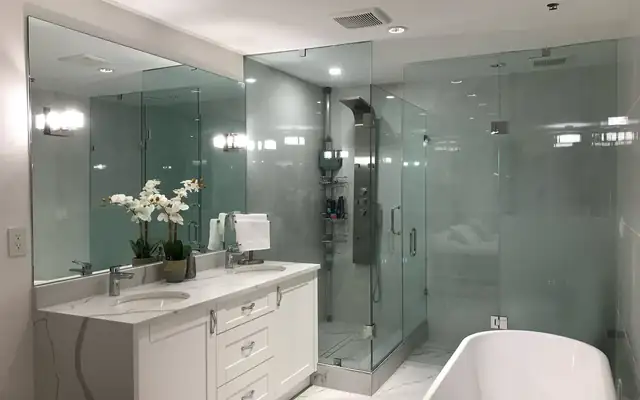
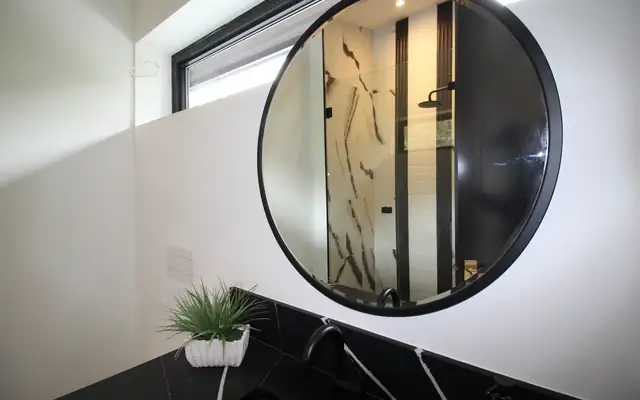
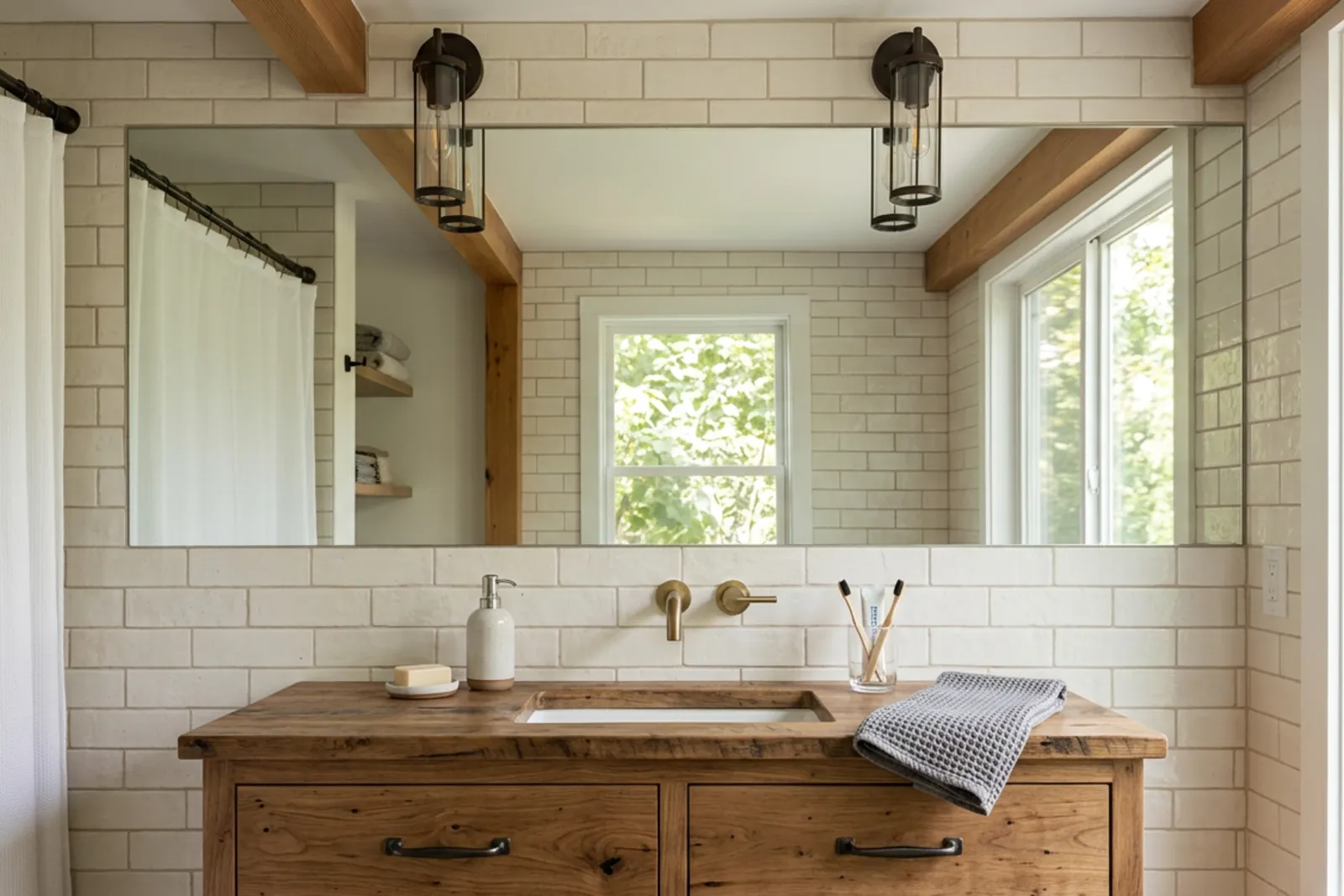
For a single vanity, a mirror centered over the sink often creates a straightforward layout. A wider mirror can be useful when the countertop extends beyond the basin or when users stand in different positions.
With a double vanity, two separate mirrors can give each sink its own visual space. One continuous mirror creates a less interrupted reflection and may help a compact bathroom feel more open. Neither arrangement is automatically better. The choice depends on the spacing of the sinks, light fixtures, storage, and personal preference.
Coordinate the Mirror With Lighting
Mirror dimensions and lighting locations should be planned together.
Side-mounted lights can provide more even facial illumination than a single overhead fixture, though the quality of the light and its placement still matter. If sconces sit beside the mirror, allow enough room for their mounting plates and servicing.
If fixtures pass through the mirror, their positions and required cutouts must be confirmed before fabrication. Electrical work should be coordinated with a qualified electrician. Cutting around a fixture after the mirror is installed is not a sensible shortcut.
A useful design check is to consider the shortest and tallest regular users. The mirror should provide a comfortable view without forcing someone to lean, bend, or step away from the sink.
Account for Moisture and Surrounding Finishes
Bathrooms expose mirrors to humidity, splashes, and cleaning products. Mirror backing and edge protection matter because prolonged moisture exposure can contribute to deterioration, particularly near vulnerable edges.
Discuss suitability for the location, ventilation, and care requirements with the glass supplier. A mirror near a shower enclosure needs different consideration than one in a dry hallway.
Mirrors can sometimes be installed over tile or above an existing backsplash, but the surface must be assessed first. Loose tiles, uneven walls, or unsuitable finishes may need correction before glass installation.
Corner layouts are another option. Mirrors on adjoining walls can extend visibility, although the intersecting reflections may feel busy. Reviewing the layout before fabrication helps avoid surprises.
Full-Wall Mirrors for Gyms, Studios, and Closets
Large mirrors have a clear purpose in exercise spaces: they let users observe posture, position, and movement. That makes placement more important than simply covering as much wall as possible.
In a home gym, think about where you stand during each activity. A mirror behind equipment may be difficult to see. A low-mounted panel beside moving weights may be exposed to impact. The layout should account for equipment use and safe clearance.
Dance and movement spaces may need broader coverage so users can see themselves while traveling across the floor. Large walls are often divided into panels because fabrication limits, transport, access, and handling make a single sheet impractical.
Panel seams are part of that design. Their positions should be deliberate, especially if they might interrupt the main viewing area.
Full-Length Mirrors in Dressing Areas
A dressing mirror should show the whole person from a usable standing position. Its required height depends on placement and viewing distance, so a floor-to-ceiling panel is not always necessary.
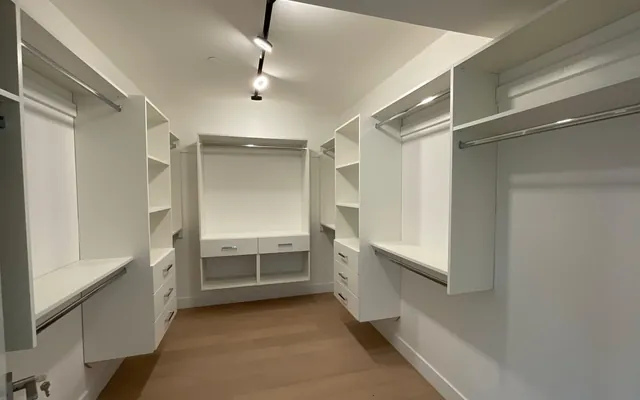
In a walk-in closet, check that hanging clothes, shelves, and open doors will not block the reflection. A narrow wall near the entrance can work well if there is enough space to stand back.
Lighting matters here too. A mirror cannot compensate for a closet that is too dim to distinguish colors or see clothing clearly.
Safety Is Part of the Specification
Large mirrors require a mounting plan matched to their weight, dimensions, location, and supporting wall.
For locations with a higher risk of impact, ask whether safety backing or another suitable glazing approach is needed. Safety-backed mirror products can help retain fragments if breakage occurs, but they are not interchangeable with every type of safety glass.
Requirements depend on the application and local regulations. Do not assume an ordinary mirror is suitable for a gym simply because it is thick.
Decorative Mirrors in Living Rooms, Dining Rooms, and Entryways
Decorative mirrors work best when their scale relates to the furniture and wall around them.
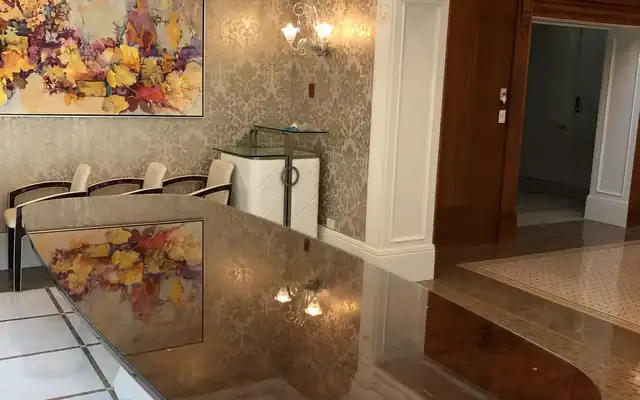
Above a console table, a mirror that is too narrow may look disconnected from the furniture below. On a broad dining room wall, a larger mirror can give the wall a clear focal point, provided the reflection is worth emphasizing.
Try a paper template before committing to a size or shape. Tape it to the wall, then look at it while standing and sitting in the room. This simple step often reveals that the first choice is too high, too wide, or too close to neighboring trim.
Entryways need a practical check as well: will an opening door strike the mirror? Will bags, umbrellas, or furniture regularly bump its lower edge? A good-looking location is not necessarily a safe one.
Framed, Frameless, Polished, or Beveled?
A polished edge has a smooth finished surface and a clean appearance. It is a common choice where exposed edges should remain visually quiet.
A beveled edge is cut at an angle around the mirror’s perimeter. It creates a border through changes in reflection and light, without requiring a separate frame.
Frames add another material to the room and can coordinate with furniture, cabinetry, or hardware. Their depth and weight must be included in the mounting plan. In a humid bathroom, frame materials also need to tolerate the conditions.
There is no need to match every finish exactly. The aim is a deliberate relationship between the mirror and its surroundings.
How Custom Mirrors Are Measured and Mounted
Accurate measurement includes more than width and height. Walls can bow, corners can be out of square, and tile surfaces can vary in thickness.
A site assessment should account for:
The opening’s dimensions at multiple points.
Outlets, switches, fixtures, trim, and other obstacles.
Wall condition and suitable support locations.
Installation clearances and any required holes or cutouts.
The route used to carry the mirror into the room.
That last point is easy to miss. A mirror may fit the wall but not the staircase, elevator, or hallway leading to it.
Measurements are best confirmed after relevant tile, cabinetry, and wall finishes are complete. If fabrication starts earlier, later changes can affect the fit.
Adhesive, Channels, and Mechanical Clips
Mirror-compatible adhesive can be used in appropriate installations. Compatibility matters because an unsuitable adhesive may damage the mirror backing. The wall surface must also be sound and suitable for bonding.
J-channels can support the lower edge of a mirror, while mechanical clips or other retainers help secure it. Some projects use a combination of methods.
The choice should follow the mirror manufacturer’s guidance and the conditions at the site. Weight, wall construction, exposure, and appearance all influence the decision.
A large mirror should not be hung with improvised hardware. Mounting that looks discreet still needs to provide dependable support.
What to Expect During the Installation Process
Custom mirror projects generally move through consultation, site measurement, fabrication, and installation. Design choices should be settled before the glass is made.
That includes the final dimensions, edge treatment, panel arrangement, cutouts, and mounting approach. Changes after fabrication can be expensive, and some changes require a replacement panel.
A straightforward residential installation may be completed in one visit once fabrication is finished and the site is ready. More complex work can require additional visits or coordination with other trades.
Lead times vary. Simple projects may move quickly, while specialty shapes, large panels, unusual materials, or difficult access can take longer. Ask for a project-specific schedule rather than treating a general turnaround estimate as a guarantee.
Before installation, clear the work area and protect nearby belongings. If adhesive is used, follow instructions about curing time and any restrictions on cleaning or disturbing the mirror.
Keeping Custom Mirrors Looking Good
Routine care is simple, but edges and backing deserve protection.
Use a soft, lint-free cloth and a cleaner approved for the mirror. Applying cleaner to the cloth rather than spraying heavily onto the glass helps limit liquid running behind the edges.
Avoid abrasive pads and harsh chemicals that could damage finishes or backing. In bathrooms, use ventilation to reduce persistent humidity, and do not leave water pooled against the mirror’s lower edge.
Check for movement, loose retainers, cracks, or changes around the mounting points. If a large mirror shifts or becomes damaged, keep people away and arrange a professional assessment.
Start With the Room, Then Choose the Mirror
The most useful custom mirror is sized and placed around the way a room actually works. In a bathroom, that means comfortable visibility and coordinated lighting. In a gym, it means a clear view and appropriate impact precautions. In an entryway, it means a helpful reflection without interfering with doors or circulation.
Before fabrication, decide what you want to see, where you will stand, and what the wall can safely support. Then confirm the details through careful measurement.
Those decisions matter more than choosing the largest possible panel. A well-planned mirror fits the space, performs its purpose, and feels like it belongs there.
Planning a glass project?
Send us a photo and the rough size. We will measure on site and give you a fixed written quote.
Get a Free Quote