
Frameless vs Semi-Frameless vs Sliding Shower Doors: What Actually Makes Sense for Your Bathroom?
Compare frameless shower doors, semi-frameless, and sliding options with Vancouver pricing. Find the best fit for your bathroom with Alpha Glass Ltd.
Picking a shower door sounds simple until you get into the details. Then suddenly you're comparing glass thickness, hinge backing, curb height, rollers, water containment, and a price spread that can swing by a few thousand dollars.
I think this decision gets oversimplified too often. People hear "frameless" and assume it's always the best option. Sometimes it is. Sometimes it is absolutely not. A tub-shower in a tight condo has different needs than a curbless ensuite in a custom home.
In Metro Vancouver, your shower glass choice can easily account for 10 to 25 percent of a bathroom renovation cost, depending on the scope. It also affects how the room looks every day, how well it keeps water where it belongs, and how much maintenance you'll deal with over the next 10 to 25 years.
This guide breaks down frameless, semi-frameless, and sliding shower doors in plain terms, with Vancouver pricing, code and installation realities, and the mistakes that tend to cost homeowners money.
A quick side-by-side comparison
Here is the short version first.
TypeTypical installed cost in VancouverGlass thicknessLookTypical lifespanBest useSliding bypass, framed$800 to $1,8001/4 inch, 6 mmVisible aluminum frame10 to 15 yearsTubs, rentals, narrow openings, secondary bathsSemi-frameless pivot or hinged$1,200 to $2,4003/8 inch, 10 mmCleaner look, minimal frame15 to 20 yearsFamily ensuites, mid-range primary bathsFrameless fixed panel plus hinged door$1,800 to $3,8001/2 inch, 12 mmNear-invisible, premium look20 to 25 yearsPrimary ensuites, walk-in showersFrameless curbless full enclosure$3,200 to $5,500+1/2 inch, 12 mmOpen, spa-like feel20 to 25 yearsLuxury ensuites, accessibility buildsFrameless-on-track sliding bypass$2,400 to $4,2003/8 to 1/2 inchModern narrow-frame look15 to 20 yearsTight spaces, tub conversions, condos
These price ranges typically include the glass, hardware, templating, delivery, and standard installation labour. They usually do not include extras like custom notches, low-iron glass, wall reinforcement, or major site corrections.
What separates these three door styles
Frameless shower doors
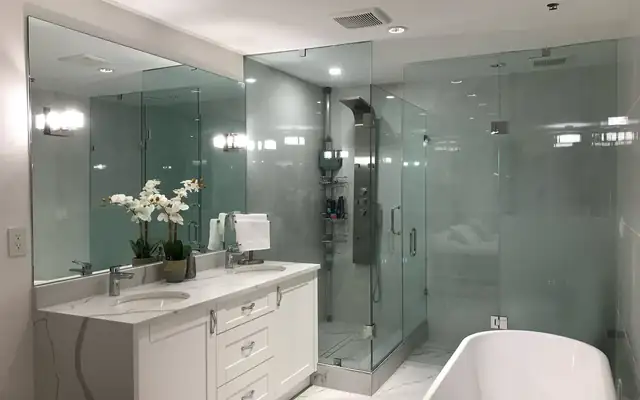
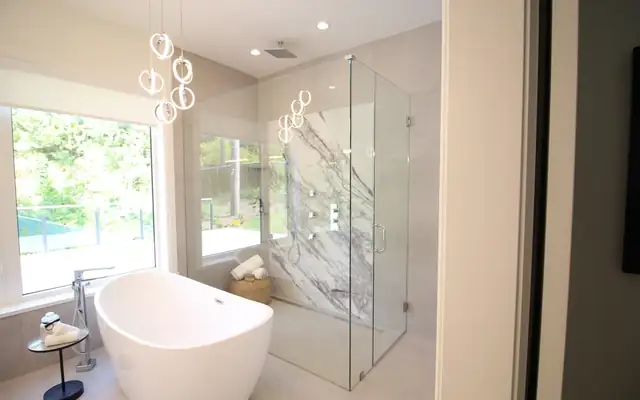
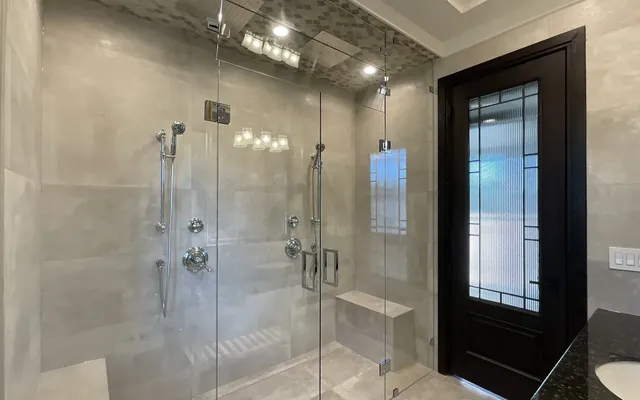
Frameless shower doors use heavy tempered glass and very little metal. No bulky perimeter frame. No obvious track around the whole opening. Just glass, hinges, clips, and sometimes a small sweep or seal.
This is the look most people picture when they want a clean, modern shower enclosure.
True frameless installations in Vancouver usually use 1/2 inch tempered glass. That's not just a style choice. The glass needs the thickness because there isn't a full frame supporting it. Anything thinner starts to feel less stable, especially on wider panels or hinged doors.
That heavier glass is one of the main reasons frameless costs more. Material alone often runs around $45 to $60 per square foot, compared with roughly $20 to $30 for thinner framed slider glass. Hardware also costs more, often $300 to $700 depending on finish and quality.
Frameless works best when the bathroom is designed for it early. Hinges need solid anchoring. That usually means 2x6 framing or 3/4 inch plywood blocking behind tile in the hinge area. If that backing wasn't planned before the walls were closed, the "simple glass upgrade" can turn into a wall-opening problem.
Water containment is the tradeoff. Frameless doors are not sealed tight at the bottom. There's usually about a 3/16 inch clearance by design. If the curb is too low, the shower head points toward the door, or the floor slope is off, water can escape. For that reason, a practical curb height for frameless is often 4 to 6 inches, even though plumbing minimums may be lower.
Semi-frameless shower doors
Semi-frameless sits in the middle, and honestly, that's where a lot of homeowners should start.
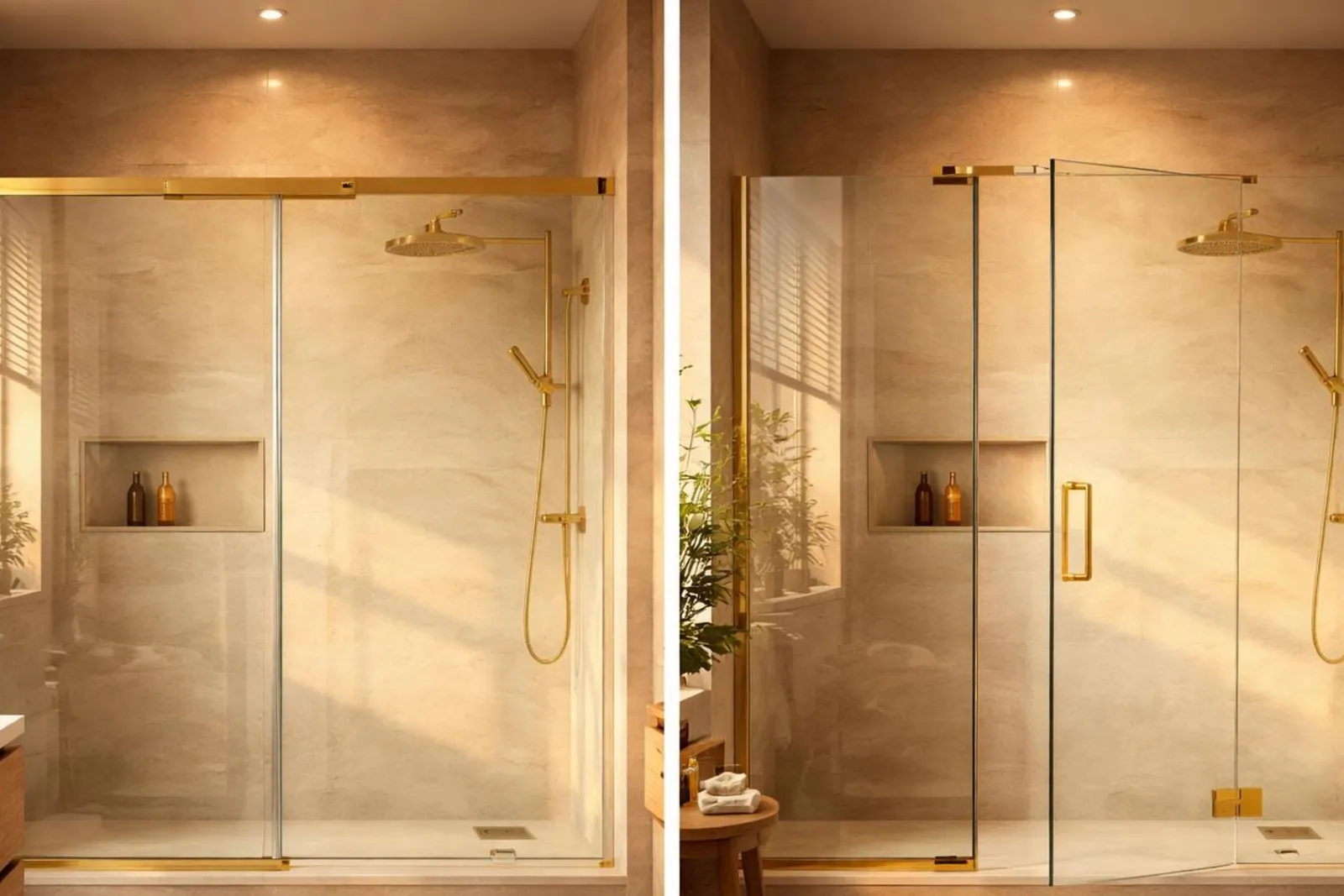
These systems usually use 3/8 inch tempered glass with a slim frame, header, or support bar. The door itself often swings free, so you still get a lighter visual look than a fully framed unit, but the extra structure makes installation simpler and less expensive.
This category is the value sweet spot for many bathrooms. You get a cleaner look than a traditional framed slider, but you avoid some of the cost and site sensitivity of full frameless.
Because the glass is thinner, pricing is lower. A ballpark range for glass is around $30 to $40 per square foot, and hardware often lands around $150 to $350. Install can also be faster. In some cases it is straightforward enough for a single installer, depending on the layout and panel size.
Semi-frameless also tolerates real-world bathroom conditions a little better. Walls that aren't perfectly flat, older tile work, and retrofit situations are often easier to handle with a header or slim frame helping carry the load.
If you're renovating a family ensuite or a mid-range primary bathroom, this is the option I would take seriously before jumping straight to frameless.
Sliding shower doors
Sliding shower doors solve a very practical problem. They do not need swing clearance.
That matters a lot in condos, hall bathrooms, tub-shower combos, and smaller layouts where an outward-opening door would hit a vanity, toilet, or person.
There are really two slider categories.
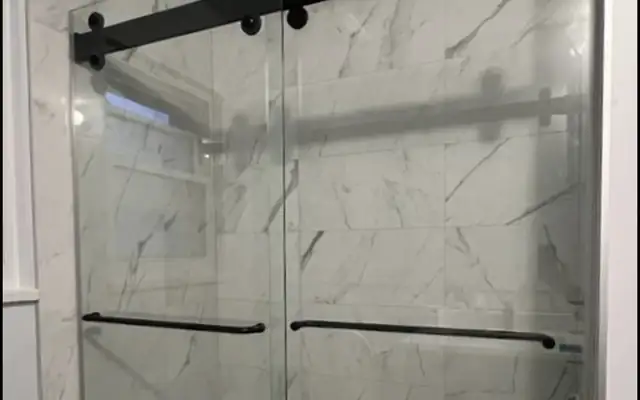
The budget version is the classic framed bypass door. Two overlapping panels move on a track, usually with 1/4 inch tempered glass and an aluminum frame. These are common on bathtubs and secondary bathrooms because they are the least expensive route and they contain water fairly well when installed properly.
The downside is longevity. Plastic rollers and lighter hardware wear out. Ten to fifteen years is a fair expectation, though cheap systems in busy bathrooms can start feeling rough much sooner. If it's a primary bathroom, stainless roller upgrades are often money well spent.
Then there is the modern frameless-on-track slider. This version uses heavier 3/8 or 1/2 inch glass with a cleaner stainless header and concealed rollers. It costs more, often $2,400 and up installed in Vancouver, but the look is much closer to current design preferences.
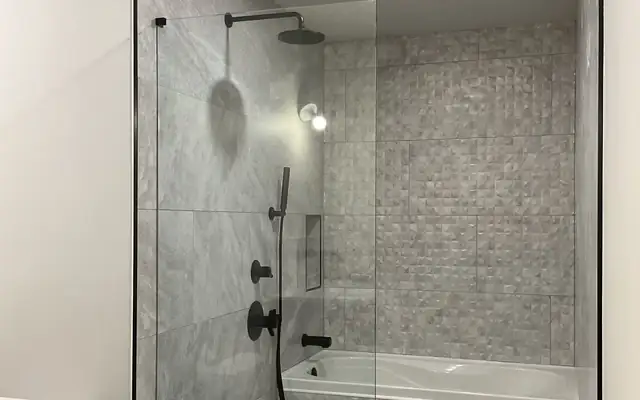
For tubs, sliders are usually the right answer. A frameless hinged door on a bathtub sounds elegant until you remember the hinge loads, splash pattern, and entry geometry. In practice, it is usually the wrong fit.
What the real projects tell you
Price lists are useful, but actual projects tell the story better.
A standard bath in Coquitlam with a 60 inch tub opening and a framed sliding door came in around $980 installed. That's a very normal number for a straightforward refresh.
A Burnaby townhouse with a semi-frameless pivot door, 3/8 inch glass, and brushed nickel header landed around $1,650. Three years later, the hardware was still performing well. That kind of job explains why semi-frameless is so popular. It looks clean without blowing up the budget.
In Maple Ridge, a custom 90 degree walk-in frameless enclosure with a fixed return and hinged door came in at $2,950. The catch was hidden in the wall. It required a 2x6 hinge stud bay to support the hardware.
A more design-driven Burnaby ensuite with frameless 1/2 inch glass, low-iron upgrade, and brushed gold hinges reached $3,650. In West Vancouver, custom champagne gold hardware pushed another frameless project to about $4,400, with hardware premiums alone adding roughly $400.
And when you move into curbless or steam-style layouts, numbers climb quickly. A North Vancouver curbless enclosure with extra glass for steam control reached about $5,200 installed.
So yes, "frameless" is one label, but the actual invoice depends on layout, hardware, finish, and site prep.
Code, safety, and installation realities in BC
All shower glass in this category should be CSA-certified tempered glass. In BC, safety glazing is not optional. The panel should carry a permanent etched certification mark.
One detail homeowners often miss is that tempered glass cannot be cut or drilled after tempering. Every hole, notch, hinge cutout, and hardware location must be templated correctly before fabrication. If measurements are wrong, you don't trim it on site. You replace the panel. Depending on the size and complexity, that mistake can cost roughly $300 to $1,200.
Wall flatness matters too, especially for frameless work. If the tile is out of plane by more than about 1/8 inch, the glass may not sit properly. In older Vancouver bathrooms, especially pre-2010 renos, that can mean skim coating or wall correction before installation. Budget around $400 to $800 when walls need help.
Steam showers add another layer. If the goal is actual steam containment, overhead glass is usually needed. That can add about $400 to $1,500 depending on the design.
The mistakes that cost the most
The expensive errors usually happen before the glass is ordered.
The first is deciding on the shower door too late. If you wait until demo or tile day to choose between sliding, semi-frameless, and frameless, you may already have the wrong framing, wrong curb height, or wrong clearances.
The second is skipping wall blocking. This one hurts. If frameless hinges were not planned with proper backing behind tile, retrofitting can cost $1,200 to $2,000, and sometimes full frameless becomes impractical.
The third is assuming every wall is flat enough for frameless. Many aren't.
The fourth is buying the cheapest framed slider for the bathroom you use every day. For a rental or basement bath, fine. For your main bathroom, low-grade rollers tend to become the thing you quietly hate every morning.
The fifth is ignoring low-iron glass on premium frameless jobs. Standard tempered glass has a green edge that becomes noticeable on 1/2 inch panels, especially with black, brass, or gold hardware. Low-iron glass often adds $150 to $400 per panel. On a basic slider, I wouldn't lose sleep over it. On a high-end frameless enclosure, I probably would.
How to budget for shower glass in Vancouver
A useful planning rule is to reserve about 8 to 12 percent of the total bathroom budget for shower glass.
A $25,000 bathroom often supports a $2,000 to $3,000 glass package. A $45,000 renovation can reasonably carry $4,000 to $5,500 for a more custom enclosure.
Timing matters. Choose the enclosure type during design, frame the needed blocking before tile, and order custom glass only after rough-in is done and tile is fully installed. Glass templating needs finished surfaces.
Lead times are not all the same. Custom frameless glass usually takes about 14 to 21 days from template to install. Standard framed or semi-framed products can move faster if the sizes are in stock.
One small design tip that goes a long way, match the shower hardware finish to the plumbing fixtures. Mixed metals can work, but accidental mixed metals tend to look accidental.
Maintenance and lifespan, the part nobody thinks about at purchase
Glass itself lasts a long time. The wear items do not.
A well-installed frameless door can last 20 to 30 years or more structurally, but sweeps, gaskets, magnets, and hinges wear on their own schedules. Rubber sweeps and gaskets often need replacement in 5 to 10 years. Budget roughly $100 to $300. Magnetic closures may last 7 to 15 years. Hinges and better-grade hardware can go 10 to 20 years, sometimes longer with regular care.
Sliding systems have their own weak point, rollers. This is why two sliding doors with the same opening size can age very differently. Better hardware usually pays back over time.
For cleaning, a daily squeegee still wins. It is boring advice. It is also the advice that saves the most grief. Metro Vancouver water is often softer than in some other regions, but mineral buildup still happens, especially in parts of East Vancouver and the Fraser Valley. Hydrophobic coatings can help and usually cost around $200 to $400.
Which option makes the most sense?
If you want the shortest answer, here it is.
Choose sliding bypass doors for tubs, tight bathrooms, and layouts where a swing door is awkward or unsafe.
Choose semi-frameless when you want a cleaner, more current look without the full cost and site demands of frameless.
Choose frameless when the bathroom is a primary ensuite, the design leans modern, the walls and framing have been planned properly, and you're willing to pay more for the look.
That last part matters. Frameless is often worth it for a long-term primary bathroom. For a flip, a rental, or a secondary bath, semi-frameless usually gets you most of the visual upgrade for less money and less installation risk.
There is no universally "best" shower door. There is only the best fit for the room, the budget, and the way the bathroom will be used.
If you get those three things right, the glass will feel obvious in the best way. If you get them wrong, you'll notice it every day.
Planning a glass project?
Send us a photo and the rough size. We will measure on site and give you a fixed written quote.
Get a Free Quote