
Glass Railings in Greater Vancouver: Costs, Code, and What to Know Before You Hire an Installer
Learn glass railing Vancouver costs, code, and hiring tips for your project. Read this guide to compare options and choose the right installer.
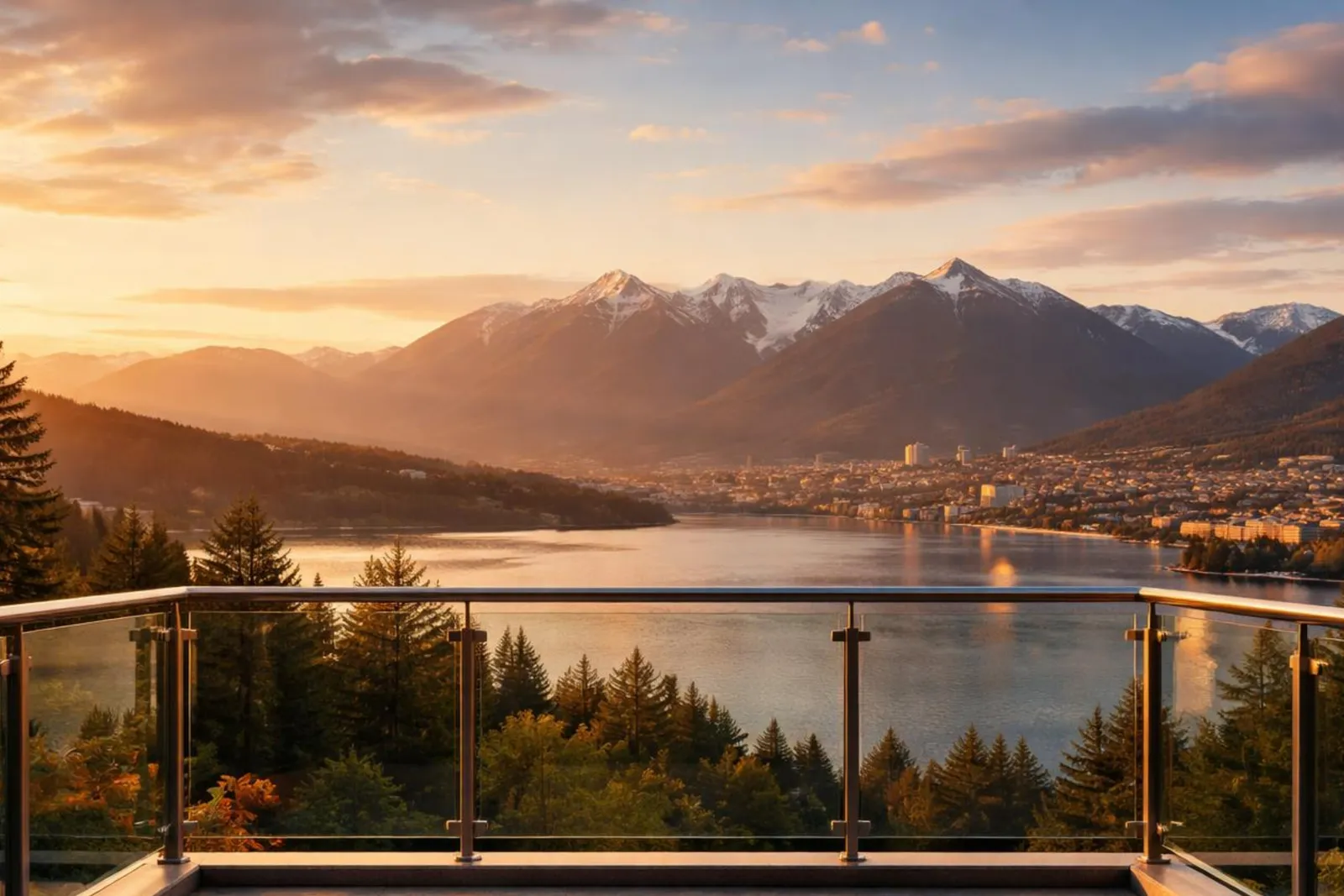
If you live in Greater Vancouver, chances are you have seen more glass railings in the last few years than you did a decade ago. There is a reason for that. In this part of BC, the view is often half the point of the property. Mountains, water, valley lines, city lights, even a small greenbelt behind the house, people want to keep those sightlines open.
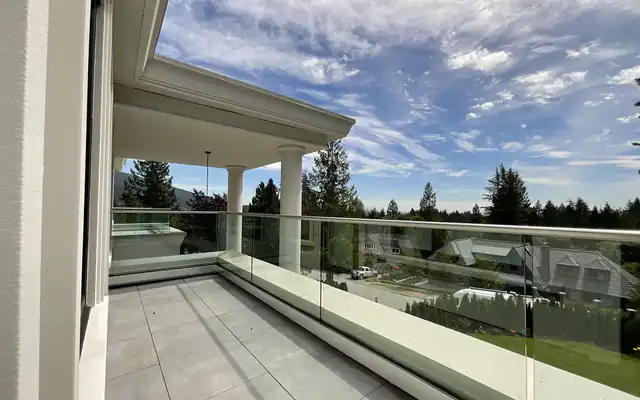
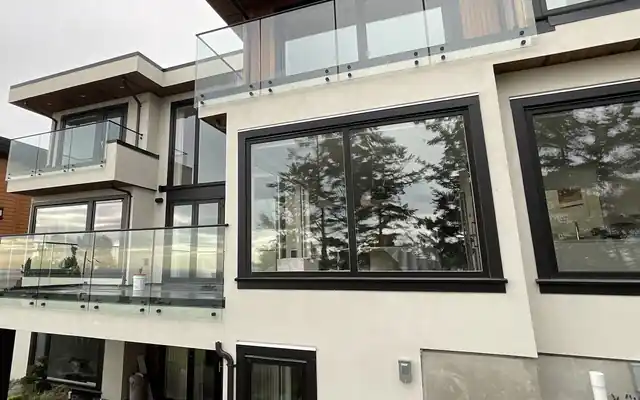
That is why glass railings have become such a common upgrade for decks, balconies, stairs, and patios across Vancouver, Burnaby, Coquitlam, Surrey, Maple Ridge, White Rock, and the Fraser Valley. They look clean, they let in more light, and they handle wet coastal weather better than many traditional wood systems.
Still, they are not all the same. A frameless system is a different decision from a framed one. Local code matters. So does access to the site, glass thickness, and whether your municipality treats a railing and a pool enclosure the same way. If you are comparing quotes for a glass railing Vancouver project, the details matter more than the glossy photos.
Why glass railings fit Vancouver homes so well
Some home upgrades are mostly about style. Glass railings are one of the few that also make practical sense here.
The biggest draw is obvious. They preserve views. A traditional wood or metal baluster system chops the view into vertical slices. Glass does not. On a waterfront lot, an upper balcony, or a sloped property in the Fraser Valley, that difference is hard to ignore.
There is also the climate. Vancouver and the surrounding region get a lot of rain, a lot of moisture, and long stretches of damp weather. Wood railings can work, but they ask for steady attention. They need staining or resealing every year or two, and they are vulnerable to rot, swelling, and warping. Quality glass railings do not have that problem. The glass itself will not rot, and with the right hardware, the system holds up well in coastal conditions.
Then there is the light. This matters more than people expect. Transparent panels let daylight move through a deck edge, stair opening, or balcony line instead of stopping at a wall of posts and pickets. Small outdoor spaces often feel bigger with glass. Interior staircases do too, which is why indoor glass railing systems show up more often in modern renovations.
I also think buyers notice them. Maybe not as a line item on a spreadsheet, but in person, yes. Open sightlines and a tidy exterior read as a modern upgrade.
The three main types of glass railing systems
Most residential projects in Metro Vancouver fall into one of three categories: frameless, semi-frameless, and framed. The right choice depends on budget, view, structure, and how much visible hardware you are comfortable with.
Frameless glass railings
Frameless systems use glass panels mounted directly to the deck or floor with specialized base hardware or spigots. There are no regular vertical posts interrupting the run.
This is the cleanest look and the least obstructed view. In practical terms, view obstruction is minimal, often around 0 to 5 percent. If your home backs onto water, a ravine, or mountain views, this is usually the system people want first.
It is also the most expensive option. Typical pricing runs about $300 to $400 per linear foot. For a 20 foot deck edge, that often lands around $6,000 to $8,000.
The trade-off is complexity. Frameless systems demand precise measurement, sound structure beneath the mounting surface, and proper engineering. They are not forgiving. Even small layout errors show up quickly when there are no posts or rails to hide them. In BC, topless frameless designs can be acceptable for residential use when properly engineered, but this is exactly the kind of detail that needs local code knowledge rather than guesswork.
Semi-frameless glass railings
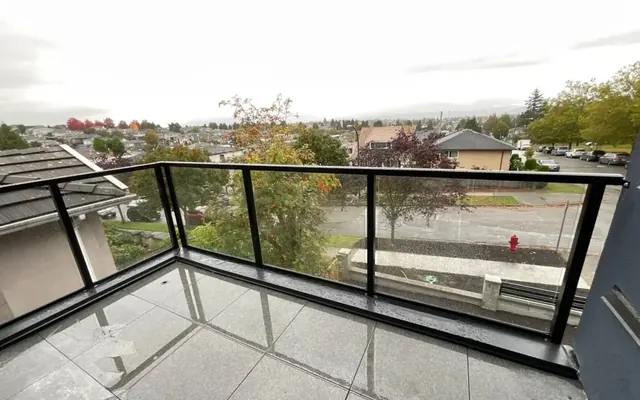
Semi-frameless systems are probably the sweet spot for many homeowners. They usually use aluminum posts, often spaced no more than 42 inches apart, with a top cap rail and glass infill panels. Many skip the bottom rail, which keeps the look fairly open.
You still get a modern appearance and good sightlines, with low view obstruction in the 10 to 15 percent range. Cost is usually lower than frameless, around $250 to $350 per linear foot. A 20 foot run often falls between $5,000 and $7,000.
This is the system I see as the practical middle ground. It preserves the view, gives installers more conventional attachment points, and tends to move through code review more easily. For many outdoor glass railing projects on residential decks, that balance matters.
Framed glass railings
Framed systems use both top and bottom rails with glass inserts between them. They obstruct more of the view, roughly 20 to 30 percent, but they can suit homes where a more traditional or more visibly structured look makes sense.
They are usually the most affordable of the three major options, at about $200 to $300 per linear foot. A 20 foot section often comes in around $4,000 to $6,000.
Framed railings are also simpler to install using more conventional methods. If your priority is durability, budget control, or matching an existing railing style, framed glass is often a reasonable choice.
Why glass often beats wood in BC's climate
People sometimes hesitate at the upfront price of glass railings, and fair enough. They do cost more at the start than many wood systems. But in this climate, the cheaper option on day one is not always cheaper over time.
Wood railings usually need resealing or staining every one to two years. In a rainy region, that maintenance adds up fast. A typical homeowner might spend about $200 to $500 per year on upkeep, depending on size and condition. There is also the real chance of repair work if sections begin to rot or twist.
Glass is simpler. Routine cleaning is the main job. If you are doing it yourself, yearly supply costs can be modest, often in the range of $20 to $50. There is no painting, no staining, and no rot repair.
The lifespan gap matters too. Wood railings often last around 10 to 15 years before major repair or replacement becomes part of the conversation. A quality custom glass system can last 30 years or more with proper hardware and installation.
Over a 15 year period, rough comparisons often look like this: wood may end up costing around $7,500 to $11,500 when you include maintenance and replacement pressure, while glass may total around $5,500 to $7,500. Those are broad estimates, not guarantees, but they explain why many homeowners stop thinking only about the initial invoice.
There is also the day-to-day experience. Solid glass panels can block wind better than open picket railings, which can make a deck feel more usable on breezy days near the water.
BC building code details that matter
This is the part people tend to skip until the project gets complicated. I would not skip it.
In BC, guard systems using glass need to meet material and dimensional requirements. For many residential guard applications, 12 mm is the minimum glass thickness referenced in local guidance. The glass used is typically safety glass, usually tempered, laminated, or a combination depending on system design and engineering requirements. That matters because safety glass handles impact differently from ordinary glass and breaks in a more controlled way.
Guard height is another key point. Residential railings are commonly required to be either 914 mm, which is 36 inches, or 1067 mm, which is 42 inches, depending on the drop and the specific location. Balconies and elevated surfaces often trigger the taller height.
Openings must also be controlled so the system prevents the passage of a 100 mm sphere. In plain language, gaps cannot be large enough for a small child to slip through.
Pool enclosures are their own category and often require more height. Across BC, 1500 mm, about 59 inches, is common, though some municipalities permit 1200 mm, about 47 inches. This is one of those local-rule issues that frustrates homeowners because the answer can change by city.
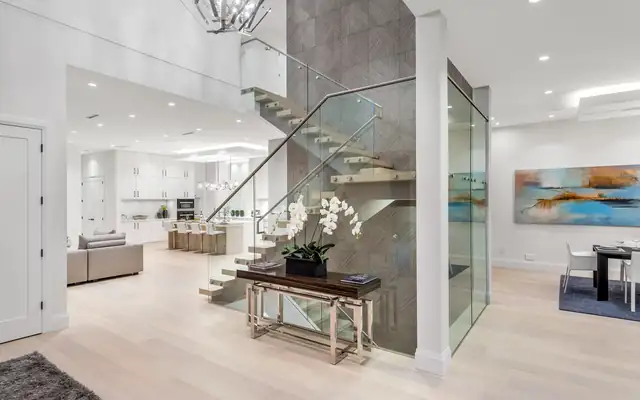
Stair projects add another layer. An indoor glass railing or exterior stair guard often needs a separate graspable handrail, and angled glass panels usually add cost because fabrication and installation are more involved.
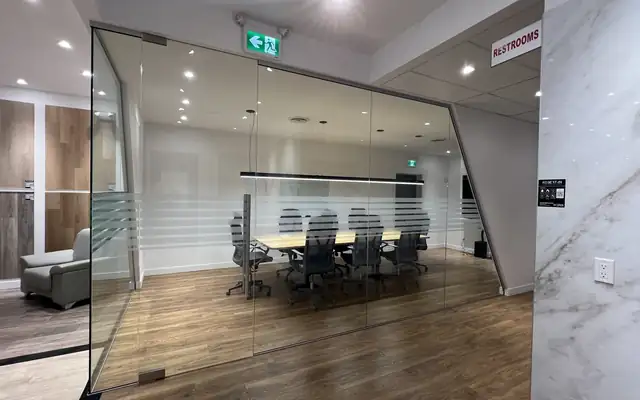
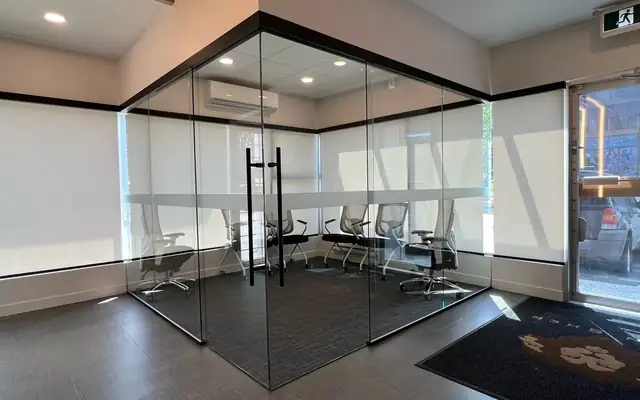
This is why DIY is usually a bad idea here. Moving and setting large panels safely is one issue. Code compliance is the bigger one. A professional glass installation team should know when a permit is required, what local inspectors expect, and how to document the system properly.
What glass railings cost in Greater Vancouver
For recent Vancouver area pricing, a good working range looks like this:
Frameless, about $300 to $400 per linear foot
Semi-frameless, about $250 to $350 per linear foot
Framed, about $200 to $300 per linear foot
Those numbers cover many standard residential situations, but price moves when the project gets more custom.
Glass type matters. Laminated panels typically cost more than monolithic tempered glass. Height matters too, especially if code requires a taller guard than you expected. Curves are expensive because the fabrication is custom and the engineering is stricter. A curved railing can add roughly 30 to 50 percent to the cost. Stair railings often add 10 to 15 percent. Pool enclosures may add 20 to 30 percent because they are taller and often involve more permitting.
Access can quietly change the whole budget. A simple deck in Port Coquitlam with easy backyard access is one thing. A narrow lot in Vancouver with limited staging space, or a steep property in Coquitlam or Burnaby, is another. Installers may need extra labor, special lifting plans, or more time on site.
Timeline is usually longer than people expect. A typical project often takes about 6 to 8 weeks from final measurement to completed installation. That usually includes site measuring, ordering hardware, custom glass fabrication, and installation. If a homeowner expects next-week turnaround, they are usually picturing stock materials, not custom glass.
Where these systems are most commonly used
Glass railings are most common on decks, and that makes sense. The whole point is usually to protect the view while keeping the edge safe.
Balconies are another frequent application, especially on upper floors where the 42 inch height requirement often applies. Patios at ground level can also use glass to define space without making a yard feel closed off.
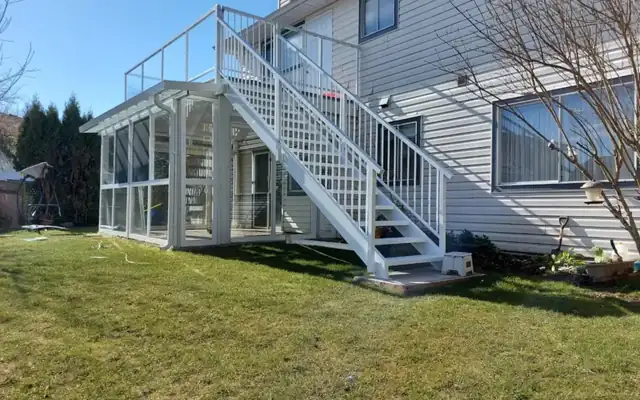
Stairs are a little different. Interior staircases benefit from the extra light, and the look can be striking without feeling flashy. Outdoor stairs work too, though they tend to cost more because of angles, handrail requirements, and more complex measurements.
Pool enclosures are a special case. Glass can make a pool area feel less boxed in, but the code requirements are stricter, and municipal variations matter more. It is worth confirming local rules before you fall in love with a design online.
How to compare installers without getting lost in the quote
Quotes for glass railings can look similar at first glance. They often are not.
When you compare installers, ask direct questions. What type and thickness of glass is included? Is the price based on tempered glass, laminated glass, or either? What hardware finish is included, and is it suitable for exterior coastal use? Who handles permit drawings if they are needed? What guard height has been assumed in the quote? If the project is on stairs, is a graspable handrail included?
Ask about measurement and fabrication too. A real custom glass project should involve precise site measurement after the structure is ready. If an installer is quoting without discussing structure, mounting conditions, or municipal requirements, that is a red flag.
I would also ask about post spacing on semi-frameless systems, drainage details around base channels, and what happens if the actual site dimensions differ from the plan. Those are not glamorous questions, but they are the questions that separate a smooth install from a messy one.
One more thing. The cheapest quote is not always the same system with a lower margin. Sometimes it is thinner glass, less robust hardware, or missing scope.
Final thoughts
Glass railings work especially well in Greater Vancouver because they match the realities of the region. People here care about views, live with wet weather, and often want a clean indoor-outdoor connection. In that context, glass makes practical sense, not just aesthetic sense.
Frameless systems give you the most open view and the highest price. Semi-frameless systems are a strong middle option for many homes. Framed systems cost less and can suit more traditional designs. Across all of them, code compliance, proper measurement, and professional installation matter a lot.
If you are comparing a wood rebuild with a new glass railing, the upfront number does not tell the whole story. Maintenance, lifespan, and usability in BC weather matter too. That is usually where glass starts to look a lot smarter.
Planning a glass project?
Send us a photo and the rough size. We will measure on site and give you a fixed written quote.
Get a Free Quote