













Why Shower Glass Condenses in Vancouver Bathrooms
Learn why shower glass condensation forms in Vancouver bathrooms and what lingering moisture may reveal about ventilation and cool surfaces. Read the guide.
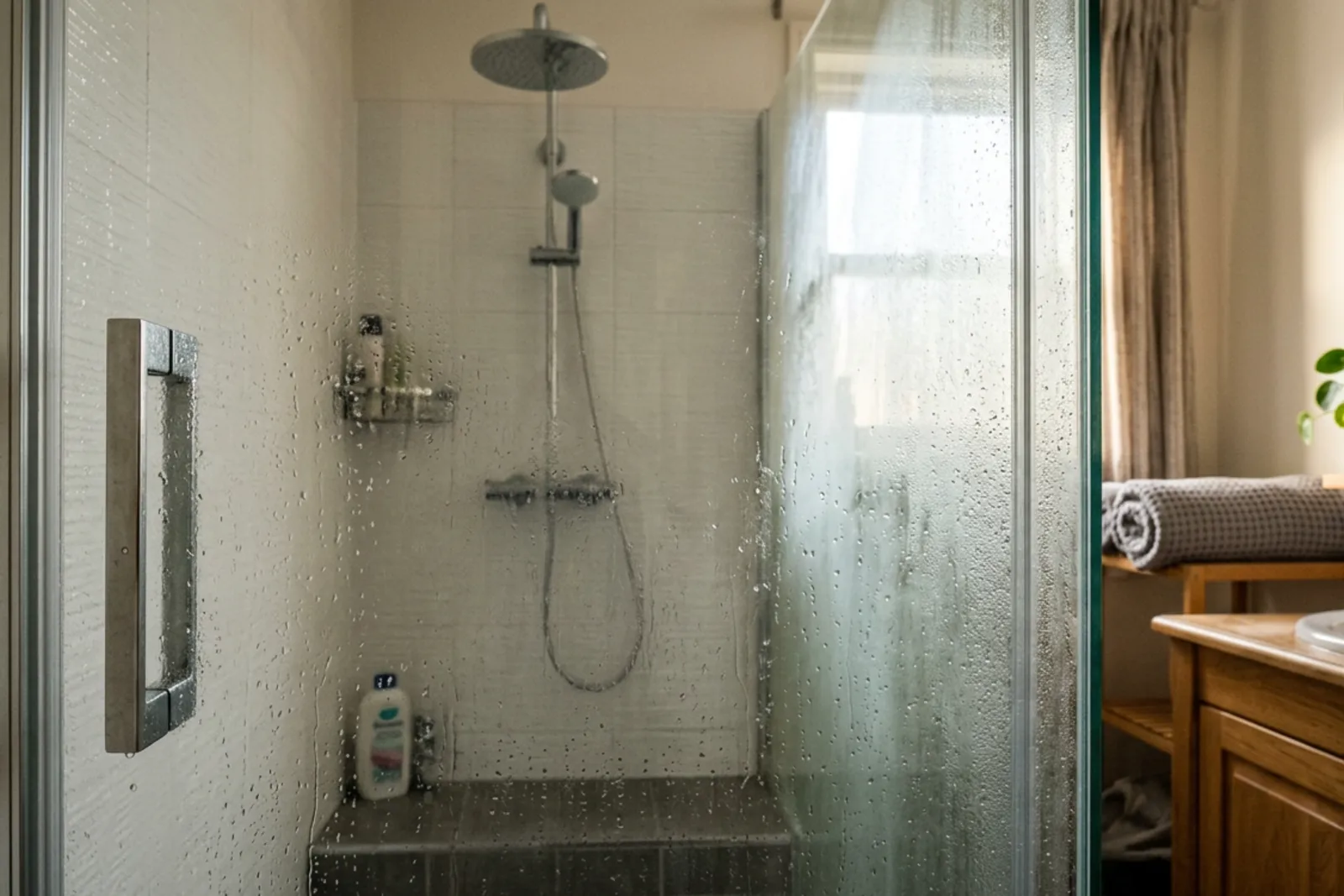
A shower can leave glass doors covered in droplets, a mirror too foggy to use, and a window wet around the edges. That is normal for a few minutes. When the moisture lingers, though, it is worth asking where all that water is going.
The usual answer is condensation. Warm, humid air from the shower reaches a cooler surface, and some of its water vapor turns into liquid. You can see it clearly on glass and mirrors. The same process may also be wetting grout, caulking, paint, and window frames, where the effects are easier to miss.
Metro Vancouver bathrooms have several things working against them: cool surfaces, long damp seasons, and, in many condos, small windowless rooms. The good news is that persistent fogging is often a useful clue. It tells you to look at ventilation, surface temperature, and how long moisture remains after bathing.
What Makes Shower Glass Fog Up?
A hot shower adds a substantial amount of moisture to the bathroom air. Evaporation from the spray, wet walls, your skin, and towels continues even after the water is turned off.
Warm air can contain more water vapor than cool air. When that warm, moist air touches a surface cold enough to bring it below its dew point, some vapor condenses into droplets. The dew point is simply the temperature at which the air can no longer hold its current amount of moisture as vapor.
This is why condensation often appears on shower glass, mirrors, and windows first. Their smooth, nonporous surfaces make tiny droplets easy to see. Painted walls and grout can get damp too, but the moisture may be less obvious. A fogged mirror is inconvenient; a repeatedly wet ceiling or wall can become a maintenance problem.
Condensation is not, by itself, proof that a shower enclosure or glass installation is faulty. Even well-fitted glass shower doors can fog when the surrounding air is humid and the glass is cooler than that air.
Why a warm shower can fog a cool bathroom so quickly
Picture a small bathroom on a rainy morning. The mirror and exterior wall have stayed cool overnight. You turn on a hot shower, and the room’s limited air volume fills with moisture. The mirror clouds over within minutes because its surface has not warmed as quickly as the air.
The temperature difference matters as much as the amount of steam. Heating the bathroom before a shower may reduce fogging by warming surfaces, but it does not remove the moisture the shower creates. Ventilation still has a job to do.
Why It Can Be More Noticeable in Metro Vancouver
Vancouver’s rainy months make a damp bathroom feel like part of the season, especially from fall through spring. Outdoor relative humidity is often high, and a cold window or exterior wall can provide an easy place for shower vapor to condense. Basement bathrooms may be cooler still because surrounding soil and concrete limit how quickly their surfaces warm up.
Small bathrooms have another disadvantage. A shower can raise their humidity quickly because there is less air to absorb the added vapor. Interior bathrooms without windows depend heavily on their mechanical ventilation. If the fan is weak, blocked, or switched off too soon, the moisture has few places to go.
There is an important wrinkle here: high outdoor relative humidity does not always mean opening a window is useless. Cool outdoor air can contain less total water vapor than warm indoor air, even when its relative humidity is high. Once brought indoors and warmed, it may help dry the room. But a window’s effect depends on weather, airflow, and how long it stays open. On a chilly or rainy day, relying on an open window alone is less predictable than using a properly working exhaust fan.
Keeping the bathroom door open has limits, too. It may help the room clear, but it can also move humid air into a bedroom or hallway. The goal is to send moisture outside, not simply spread it through the home.
Give the Exhaust Fan Enough Time
The simplest routine is to turn the bathroom exhaust fan on shortly before showering, leave it running throughout, and keep it on for at least 20 minutes afterward. In a compact, cool, or persistently damp bathroom, 30 minutes is a sensible starting point. The same approach works after a bath.
If several people shower one after another, leave the fan on between showers and for about 30 minutes after the last person finishes. A basement bathroom may need 30 to 45 minutes after use, particularly if its surfaces stay cool. These are starting points, not guarantees: the room’s size, fan airflow, ductwork, and amount of moisture all affect drying time.
A running fan should draw air toward its grille and discharge it outdoors. It also needs a path for replacement air to enter the bathroom, often through the gap beneath the door. If the room is sealed too tightly, the fan may move less air than expected.
A quick check you can do yourself
Hold a light tissue near the exhaust grille while the fan runs. It should be pulled toward the grille. If there is little or no pull, check whether the grille is dusty or obstructed.
The tissue test is only a rough check. It cannot tell you how much air the fan moves, whether the duct is restricted farther along, or where the duct ends. A fan may sound busy while moving too little air to clear the bathroom. If moisture persists despite reasonable run times, have the fan, duct, and exterior termination checked. Exhausting into an attic, crawlspace, or wall cavity moves the problem elsewhere in the building rather than removing it.
Would a Timer or Humidity Sensor Help?
A timer switch is useful when the fan works well but people turn it off as soon as they leave. Set it for an appropriate post-shower period, such as 20, 30, or 40 minutes, and the routine becomes less dependent on memory.
A humidity-sensing control can start or increase ventilation when bathroom humidity rises. Some are set around 60% to 65% relative humidity, but the best setting depends on the control and the home’s usual conditions. In a bathroom that remains damp much of the day, a sensor may run longer than expected. That can be appropriate if it is removing moisture, or it can be a reason to investigate another source of dampness.
Some ventilation systems run continuously at a low speed and boost airflow during bathing. This can help bathrooms with recurring moisture, especially windowless ones. Low-speed airflow may be in the range of roughly 20 to 30 cubic feet per minute, but the right setup depends on the home and its ventilation design.
Do not assume that every condo bathroom fan is a standalone unit you can alter. Some strata buildings use centralized ventilation or a continuously operating system. Before changing a fan, switch, or duct connection, ask strata management how the system is meant to work and what approvals are required. Electrical changes should be handled by a qualified electrical contractor under applicable British Columbia requirements; permit or inspection requirements depend on the work.
When Fogging Becomes a Moisture Warning
Glass fogging during a hot shower is ordinary. What matters more is how long water remains afterward and whether other materials are staying wet.
Check the bathroom after the fan has had time to run. Are droplets still sitting on the window or mirror? Is the ceiling paint bubbling? Does the room smell musty hours later? Are dark spots returning on caulking or grout after cleaning? Repeated moisture stains on a wall or ceiling deserve particular attention.
A mirror that remains foggy more than about 15 minutes after showering may suggest the air is clearing slowly, but there is no universal cutoff. The mirror’s temperature, room temperature, and shower length all affect what you see. Treat persistent fog as a prompt to investigate, especially when it comes with odors, stains, or surfaces that remain wet.
Mold risk rises when materials stay damp repeatedly. Condensation supplies liquid water, and grout lines, caulking edges, paint, and wall materials may dry slowly. Removing humid air helps, but so does removing water already sitting on surfaces. Run a squeegee over shower glass and tile after bathing, and address drips or leaks rather than assuming the fan will handle them.
A Practical Way to Troubleshoot a Damp Bathroom
Start by changing one easy habit: run the fan before, during, and for at least 20 to 30 minutes after each shower. If the room clears and stays dry, you may have found the main issue.
If it does not, look more closely at the system and the room:
Check the grille for dust and use the tissue test to see whether air is being drawn in.
Notice where moisture lingers. Water mainly on a cold window points toward surface temperature; widespread dampness suggests a broader ventilation issue.
Confirm that exhaust air goes outdoors and that the duct is not blocked, disconnected, or poorly routed. Get help if the route is not accessible.
Look for other water sources, including plumbing leaks, failing caulk, or water escaping the shower enclosure.
This order keeps you from blaming the glass for a problem caused by airflow or a leak. A door style, whether framed, frameless, sliding, or pivoting, does not change the basic physics of condensation. Shower enclosure design can affect how air circulates and where splashed water lands, but ventilation and drying time remain central.
If the bathroom is below grade, windowless, or damp even when nobody has showered, a longer fan cycle alone may not solve it. Persistent humidity can have more than one source. A ventilation professional or qualified contractor can assess airflow and moisture conditions rather than guessing at a replacement fan.
Keep the Glass Clear, and Watch the Rest of the Room
Condensation on shower glass is a visible sign of warm, moist air meeting a cooler surface. In Vancouver, cool bathroom surfaces and long damp periods can make that encounter frequent. The glass is rarely the whole story.
Use the exhaust fan for the full shower and long enough afterward for the room to dry. Wipe standing water from the shower when practical. If fogging lingers or you notice musty odors, peeling paint, mold spots, or stains, check whether the fan is actually moving air outdoors.
The useful question is not “How do I stop every droplet?” A hot shower may always fog a cool mirror briefly. The question is whether the bathroom dries promptly afterward.
Planning a glass project?
Send us a photo and the rough size. We will measure on site and give you a fixed written quote.
Get a Free Quote