
Why Vancouver and North Shore Glass Railings Cost More Than Fraser Valley Installations
Learn why glass railing Vancouver projects cost more than Fraser Valley installs, from coastal materials to site access. Compare quotes confidently.
A quote for glass railings can look surprisingly different depending on where the property is located. A comparable outdoor glass railing in Abbotsford or Langley may cost 15 to 25 percent less than one in Vancouver, West Vancouver, or North Vancouver. At first glance, that can seem odd. The panels are still glass. The posts, clamps, and fasteners often come from the same regional suppliers.
The difference is rarely about the raw materials alone.
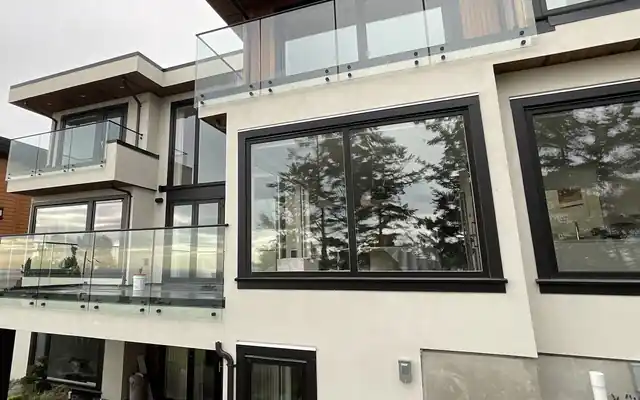
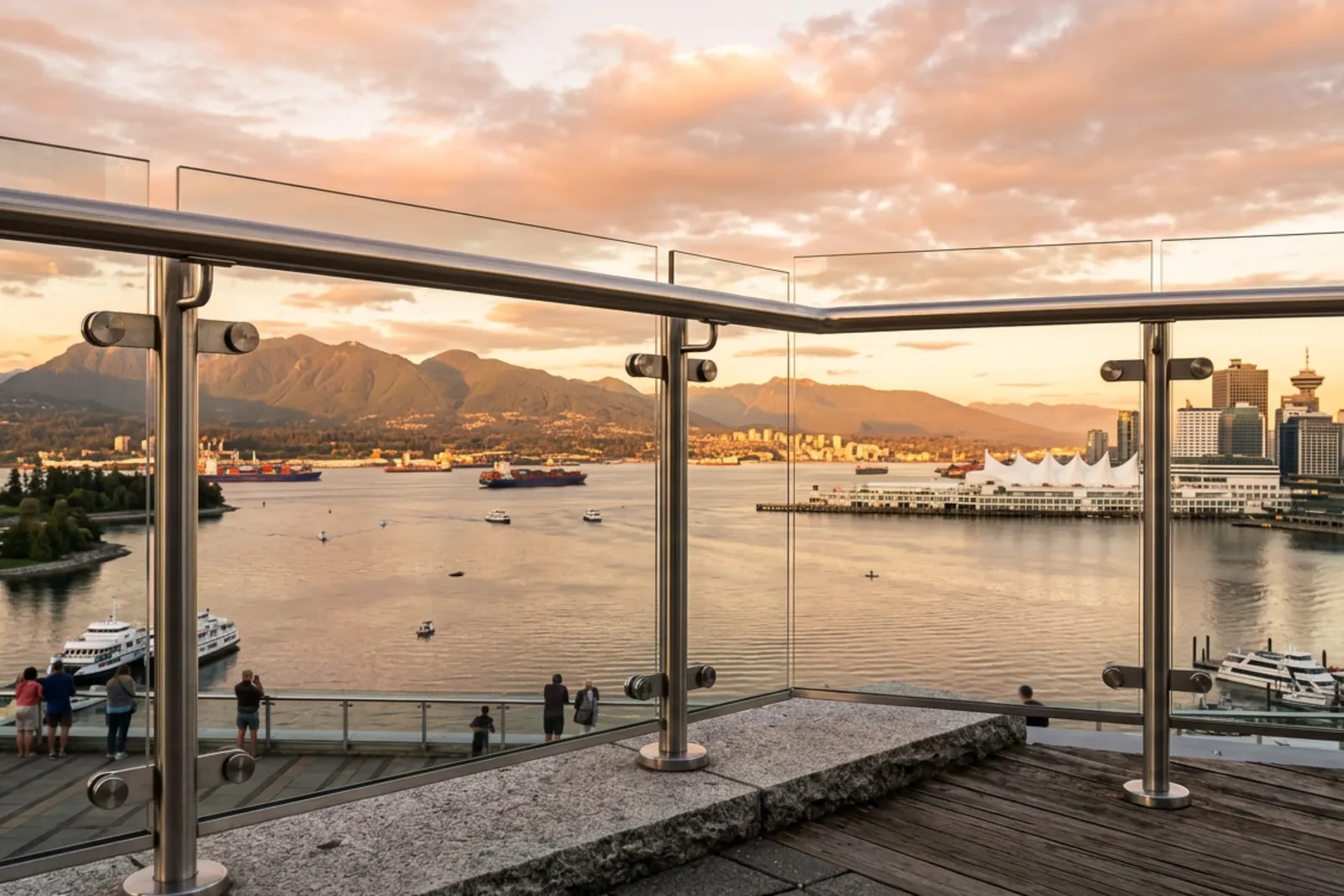
For glass railing Vancouver projects, higher prices usually come down to a combination of coastal conditions, municipal requirements, engineering, labour costs, site access, and scheduling. A deck on a quiet inland lot is a very different job from a rooftop terrace in Vancouver or a steep North Shore property facing Burrard Inlet.
Understanding these factors helps homeowners compare quotes fairly. It also makes it easier to decide where spending more is sensible, and where it is not.
Saltwater changes the material conversation
The Lower Mainland has a wide range of exposure conditions. A property near the waterfront deals with salt spray, airborne chlorides, wind-driven rain, and prolonged moisture. A home farther inland may experience plenty of rain, but far less salt contamination.
Salt is especially hard on metal hardware. Chlorides can settle on stainless steel, sit in joints and crevices, and gradually trigger staining or corrosion if the wrong grade of material is used or maintenance is ignored.
A practical way to assess a site is by its distance from saltwater.
Exposure zoneApproximate distance from shoreTypical material approachExtreme coastal0 to 200 m316 stainless steel at minimum, with 2205 duplex stainless preferred in the harshest settingsHigh coastal200 to 600 m316 stainless steel or high-performance powder-coated aluminumModerate coastal600 m to 2 kmAAMA 2605 powder-coated aluminum, 304 or 316 stainless steel depending on the designInlandMore than 2 km304 stainless steel or powder-coated aluminum often provides good value
The first 200 metres from the shore are the toughest. Waterfront homes in North Vancouver, West Vancouver, White Rock, Tsawwassen, Richmond, and Delta may need specifications that would be excessive for an inland property in Maple Ridge, Langley, Abbotsford, or Chilliwack.
That is why a glass railing is not really a one-material product. The glass may look identical, while the hardware behind it has changed substantially.
Why hardware grade affects the final price
A basic outdoor glass railing may use powder-coated aluminum posts and tempered glass. In a protected inland setting, that can be a sensible long-term choice. Aluminum does not rust, quality finishes resist weathering well, and the material generally costs less than premium stainless systems.
Near saltwater, though, cheaper hardware can become an expensive shortcut.
316 stainless steel has better resistance to chlorides than 304 stainless steel. For severe marine exposure, 2205 duplex stainless steel provides even stronger corrosion resistance and can deliver decades of service when properly maintained. It costs more upfront, but it is often the more reasonable choice for a waterfront deck where hardware replacement would be disruptive and costly.
Glass selection can also change. Tempered glass is suitable for many residential railing applications. However, laminated glass is often preferred for exposed or frameless systems because its interlayer helps retain the panel if it breaks. Laminated glass can cost roughly 50 to 100 percent more than tempered glass, depending on panel size, thickness, fabrication, and the project’s engineering requirements.
That is a meaningful increase, especially on long runs of custom glass.
Vancouver permits often take longer and demand more detail
Provincial building requirements create the starting point, but municipalities administer permits differently. Their review processes, site requirements, and documentation requests can add time and cost.
In British Columbia, guards are generally required where there is a drop greater than 600 mm. The common guard height is 900 mm for decks up to 1.8 metres above grade and 1,070 mm where the deck is higher, or for many commercial applications. Openings must not allow a 100 mm sphere to pass through.
Glass railing systems must also meet structural load requirements. This is where seemingly simple designs can become technical very quickly.
Frameless or topless glass railings usually require engineer-sealed drawings. The engineer needs to verify panel thickness, glass type, base shoe or spigot capacity, fasteners, substrate conditions, and design loads. A railing attached to a concrete slab has different concerns than one fastened to wood framing. A fascia-mounted system needs its own structural review.
Vancouver and North Shore municipalities commonly have permit timelines in the four to eight week range. Certain projects take longer, particularly when a site is in a heritage area, a high-rise, near the waterfront, or on a hillside. Burnaby, Richmond, New Westminster, Coquitlam, and Port Coquitlam may often fall into a three to six week range. Many Fraser Valley municipalities can be closer to two to four weeks for straightforward projects.
Those are planning ranges, not guarantees. Missing documents, revisions, and inspection scheduling can push any project back.
A complete permit package commonly includes:
A site plan and railing location.
Structural details and mounting information.
Material specifications for glass, hardware, and posts.
Load calculations where required.
Engineer-sealed drawings for frameless systems.
The paperwork itself is not busywork. A railing has to protect people at the edge of an elevated surface. Still, more review steps mean more administrative time, more coordination, and sometimes more revisions before fabrication can begin.
Urban installation logistics are real costs
Vancouver projects can be difficult before installers even touch a glass panel.
A ground-level deck with driveway access is relatively straightforward. A downtown condo balcony or a rooftop terrace is another matter entirely. Crews may need to book elevators, reserve loading areas, arrange parking permits, coordinate with building management, protect common areas, and work within strict noise or delivery-hour rules.
Large glass panels are awkward to move. They need careful handling, enough space for safe staging, and a clear path from the delivery vehicle to the install location. If that path includes elevators, narrow hallways, stairs, or a suspended platform, labour time rises.
Typical logistics charges can include parking permits, delivery surcharges, elevator booking fees, material hoisting, and extra crew time. On some urban projects, these items add a few hundred dollars. On more constrained sites, they can add several thousand.
This is one reason quotes should be itemized. A low initial price that excludes access costs can look appealing until those costs appear later as change orders.
North Shore properties bring a different kind of complexity
North Vancouver and West Vancouver do not always have high-rise access issues, but they have their own challenges. Sloped lots, narrow roads, limited parking, long stair runs, waterfront conditions, and difficult deck access are common.
A crew may need specialized lifting equipment or added safety measures to bring custom glass to a rear deck. Some homes require more labour simply because materials cannot be rolled from a truck to the installation area.
Hillside and waterfront sites also tend to see stronger wind exposure. That can affect post spacing, glass thickness, fastening details, and the decision between deck-surface mounting and fascia mounting. Enhanced wind-load engineering can add roughly $800 to $1,500, while difficult site access may add another $500 to $2,000 or more.
It is not glamorous, but access is one of the biggest price variables in outdoor glass railing work.
Labour rates drive much of the regional premium
Materials are often supplied through the same Metro Vancouver distribution network. A tempered glass panel does not become dramatically more expensive just because it is installed in Vancouver instead of Coquitlam.
Labour is different.
Vancouver and North Shore labour markets generally carry higher wages and operating costs. Tradespeople face higher housing costs, more competition for skilled labour, denser construction activity, and, on some projects, union-related requirements. Installers also lose more time travelling, parking, loading, coordinating access, and working around other trades.
For a custom glass installation, labour involves more than fitting panels into place. It includes site measurement, layout, fabrication coordination, transport, safe handling, anchoring, adjustment, sealing, and quality checks. If the site has unusual angles, uneven surfaces, or hidden structural issues, the job can require further field work.
That is why a 15 to 25 percent difference between Vancouver or the North Shore and the Fraser Valley is fairly normal for comparable glass railings. The gap is usually driven more by labour, engineering, permits, and site logistics than by the glass itself.
Season affects both scheduling and price
May through September is usually the easiest time to install outdoor glass railing systems. Days are longer, rain delays are less frequent, and sealants have better curing conditions. It is also the busiest season.
High demand can raise Vancouver and North Shore installation pricing by roughly 10 to 15 percent in summer. Fraser Valley increases may be more modest, often around 5 to 10 percent, partly because access is simpler and the local market is less compressed.
Winter work is still possible, but it needs more flexibility. Rain, wet surfaces, wind, and low temperatures can delay installation or affect sealing work. Contractors may build weather buffers into the schedule, adding a week or two to the expected timeline.
The Fraser Valley generally receives less rainfall than Vancouver, which can create more workable winter days. Some installers also offer winter discounts of roughly 5 to 10 percent when schedules are lighter. That discount is only worthwhile if the site conditions allow the work to be completed properly. Rushing a railing installation during poor weather is false economy.
A realistic cost comparison
Consider a 30-foot semi-frameless outdoor glass railing using powder-coated aluminum posts and tempered glass. The design is the same in each location, with no unusual custom details.
A straightforward Abbotsford project might land around $5,800. A similar Vancouver project could be closer to $6,900. On the North Shore, it could reach about $7,350 if access, wind engineering, and permit coordination are more demanding.
These figures are examples, not fixed market prices. Actual pricing depends on glass height, panel configuration, mounting method, substrate condition, permit needs, and the chosen hardware.
The useful lesson is that homeowners should not compare only the final totals. Ask what each quote includes.
A clear proposal should identify labour, engineering, permit fees, site access allowances, glass type, hardware grade, mounting method, and any assumed conditions. If one quote includes 316 stainless steel and laminated glass while another includes 304 stainless and tempered panels, they are not equivalent bids, even if the drawings look similar.
Maintenance is part of the true cost
Coastal railings need more care than inland railings. This is easy to underestimate because stainless steel has a reputation for being maintenance-free. It is not.
Near the ocean, regular freshwater rinsing removes salt deposits before they sit on hardware and cause tea staining or corrosion. A waterfront property may need monthly rinsing. High-exposure areas often benefit from quarterly cleaning. Inland installations can often be inspected and cleaned annually, with additional attention after construction dust, wildfire smoke, or heavy storms.
A premium material can reduce maintenance demands and extend service life, but no exposed railing should be ignored. 2205 duplex stainless steel can last 30 to 40 years or more in extreme coastal conditions. Properly maintained 316 stainless can often provide 25 to 30 years near the coast. A high-quality AAMA 2605 powder-coated aluminum finish may last 20 to 30 years, with longer performance expected inland.
The right choice depends on the site. Spending extra on marine-grade hardware for a sheltered inland deck may not make financial sense. Choosing budget-grade hardware beside saltwater can be equally unwise.
How to plan a better railing project
Before choosing a system, identify the property’s exposure and practical constraints. Measure distance to saltwater, but also consider prevailing wind, elevation, shelter from nearby buildings, and direct exposure to storms.
Then ask prospective installers specific questions:
What hardware grade is recommended for this location, and why?
Does the railing need engineer-sealed drawings?
Are permits included, and what is the expected municipal review time?
What access allowances are included for parking, elevators, stairs, or hoisting?
Is the price based on tempered or laminated glass?
What maintenance schedule is appropriate for this property?
Has the installer completed similar work in the same municipality?
It is also wise to confirm BC licensing, WorkSafeBC coverage, liability insurance, and recent local references. For railing work, $2 million in liability insurance is a common benchmark worth asking about.
The practical takeaway
Vancouver and North Shore glass railings cost more because the projects are often harder to design, permit, access, and install. Coastal material upgrades matter, particularly near the waterfront, but they are only one part of the equation.
A Fraser Valley installation may benefit from lower labour rates, easier access, faster permit reviews, and fewer staging restrictions. Vancouver and North Shore properties are more likely to involve urban coordination, wind engineering, difficult terrain, or strict municipal review.
The best way to control cost is not to choose the cheapest quote. It is to choose a railing system that matches the property’s exposure, code requirements, and long-term maintenance reality. A well-specified system may cost more on day one, but it is far less likely to become a frustrating repair project a few years later.
Planning a glass project?
Send us a photo and the rough size. We will measure on site and give you a fixed written quote.
Get a Free Quote